THE Canaries were among the first places in the Old World to grow potatoes, which arrived on the islands from the Americas 500 years ago. They are every bit as popular today and are evidence of a close and long-standing link between these islands and the UK.
Local farmers have imported seed potatoes from the UK for decades, and varieties such as the King Edward and Arran Banner even have their own local versions (Quinegua and Arambana).
In the days when the Canaries were the only source of ripe winter tomatoes in Europe, boats would often head to the UK with cargos of tomatoes and return laden with potatoes.
In Spain, potatoes are usually boiled, fried, or roasted (it is rare to find jacket potatoes). Size and age are important. Canarian wrinkled potatoes are smaller, and often younger than the other varieties on offer. Early maincrop potatoes are valued for general use, and this means most potatoes will have a reasonably high level of dry matter, meaning that they are floury rather than waxy.
Labels and varieties regularly seen in Lanzarote include:
Fresh Canarian potatoes are more likely to be found in smaller grocers or markets. These can be more expensive than imported potatoes, reflecting the size of the small farms that produce them. The small, dark-coloured papas bonitas have a unique taste.
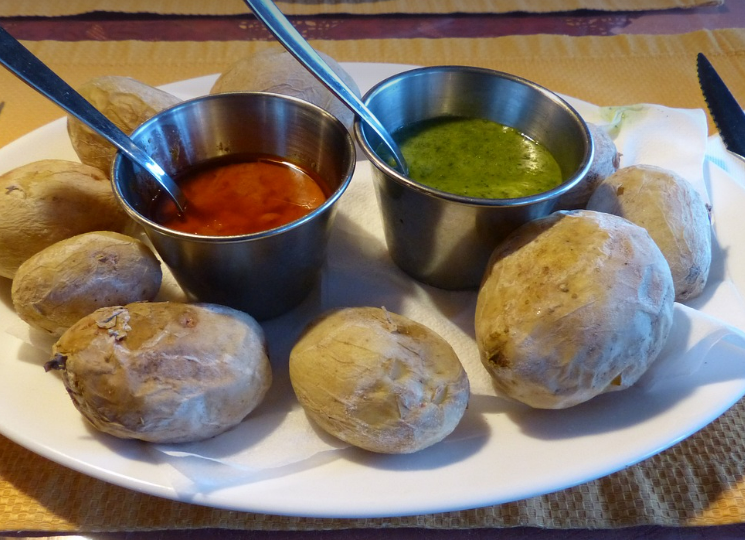
The papas arrugadas (wrinkly potatoes) served with many Canarian meals are a favourite with many diners and are cooked by placing in a saucepan covered with water with plenty of coarse local sea salt added – at least 75g for each 500 g of potatoes (sea water is not usually used because it’s a hassle and doesn’t meet restaurant hygiene regulations).
They are boiled for 15 minutes, until potatoes are cooked through (test with a fork).
Source: Lanzarote Gazette
